
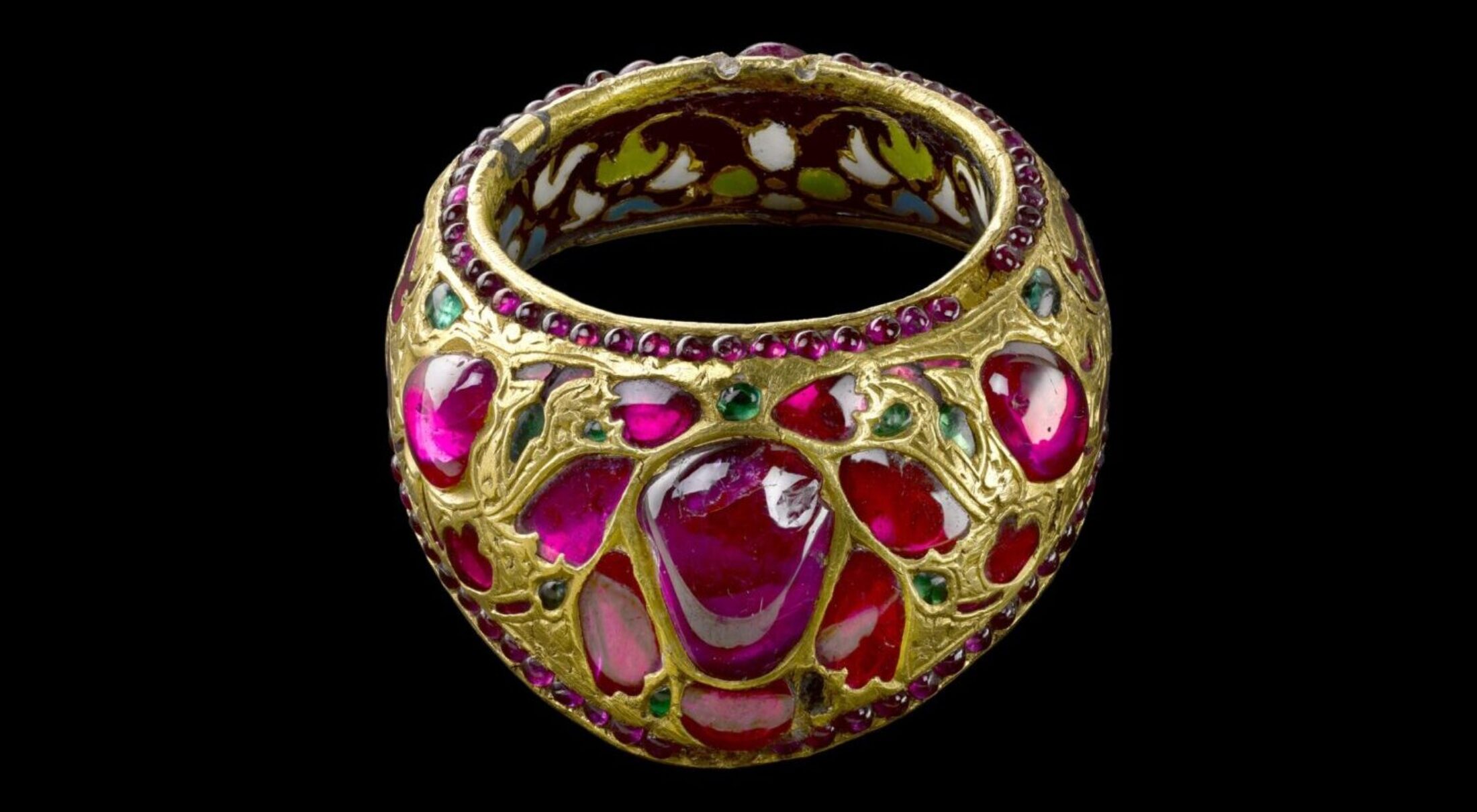
This major exhibition celebrates the breathtaking art and cosmopolitan culture of the Mughal court’s golden age (about 1560–1660) during the reigns of its most famous emperors: Akbar and his son Jahangir and grandson Shah Jahan. Known as the Great Mughals, the three men in turn ruled over a vast territory that extended from Afghanistan into much of the Indian subcontinent. They accumulated enormous wealth and power, and art and architecture flourished under their patronage. Best known for the Taj Mahal—the majestic and romantic white-domed mausoleum along the Yamuna River in Agra, India—the Mughal court also commissioned vast fortified palaces, brilliantly colored paintings, jewelry studded with rubies and emeralds, ornamental carpets, glittering metalwork, vessels made of mother-of-pearl, and more.
Bringing together cultural elements from South Asia, Iran, China, and Europe, the empire’s artists forged a distinctive new tradition that included naturalistic portraits of men and women, vibrant representations of exotic animals, and luxurious decorative arts. Floral designs proclaimed the empire a garden of paradise. The exhibition highlights all these aspects of Mughal art while also revealing how court artists used sophisticated skills and precious materials to wonderous effect. The exhibition concludes by showing the legacy of the Great Mughals in India, Pakistan, and beyond.
Created by the V&A –
touring the world

Top image: Mughal court workshops. Thumb ring, ca. 1615–20. Gold, rubies, and emeralds; 1 1/2 × 1 1/4 in. Victoria and Albert Museum, London, Purchased from Miss Dulce D. B. Barrington, IM.207-1920. © Victoria and Albert Museum, London
Exhibition supporters


The Frist Art Museum is supported in part by

Events and programs
Educator Workshop:
The Great Mughals
Educator Workshop:
The Great Mughals