In partnership with Vanderbilt University’s Office of the Provost and the Division of Government and Community Relations, the Frist Art Museum presents “Food for Thought,” a series of interdisciplinary conversations over lunch inspired by our exhibitions. These discussions will be presented by Vanderbilt faculty and staff, Frist Art Museum staff, and other members of the Nashville community.
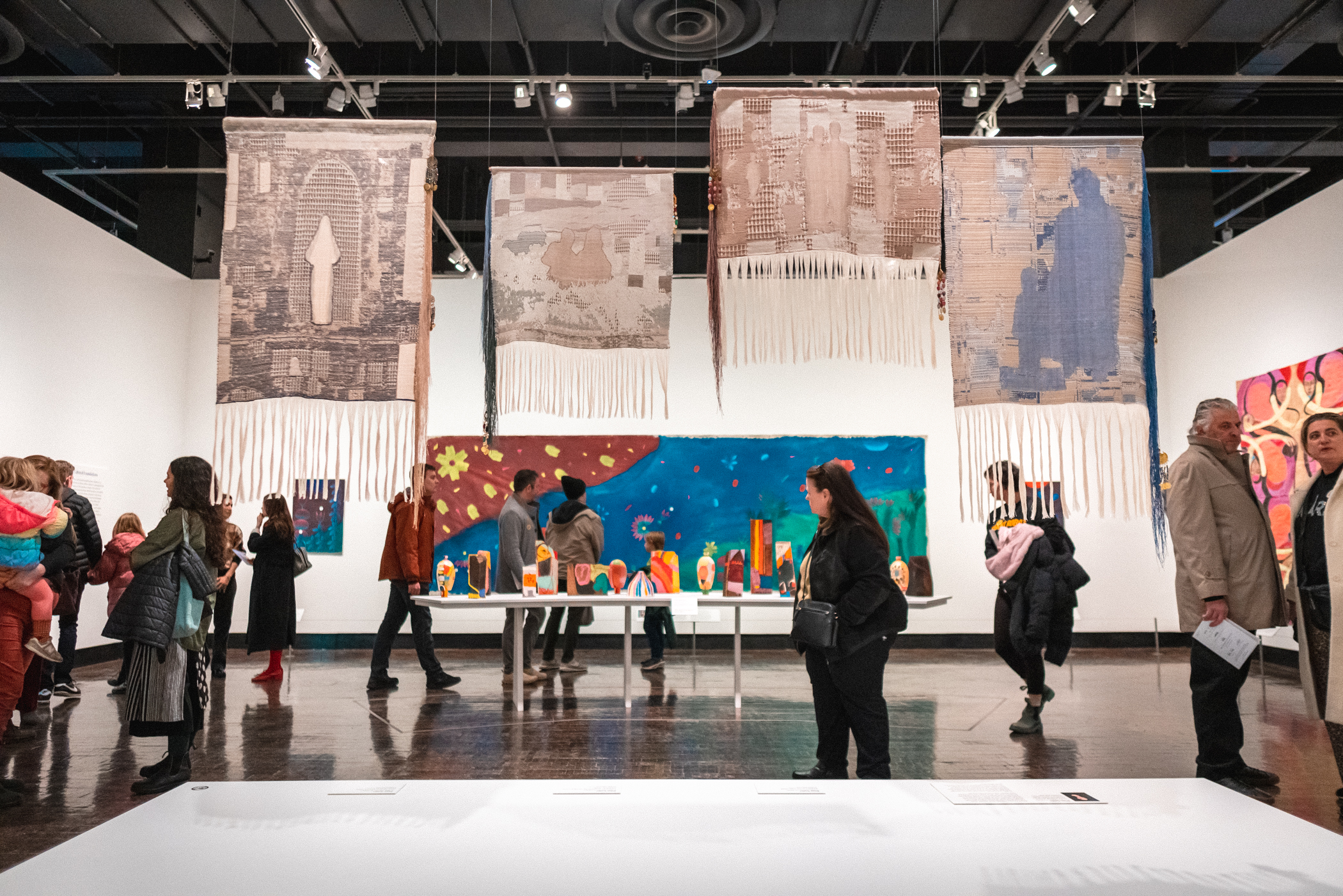
On Thursday, February 19, we will host a conversation inspired by the Frist Art Museum’s exhibition In Her Place: Nashville Artists in the Twenty-First Century. The exhibition highlights the influential role of women artists in Nashville and beyond. Featured panelists included artists and educators Elisheba Israel Mrozik, Lauren Gregory, and Jana Harper.
About Elisheba Mrozik
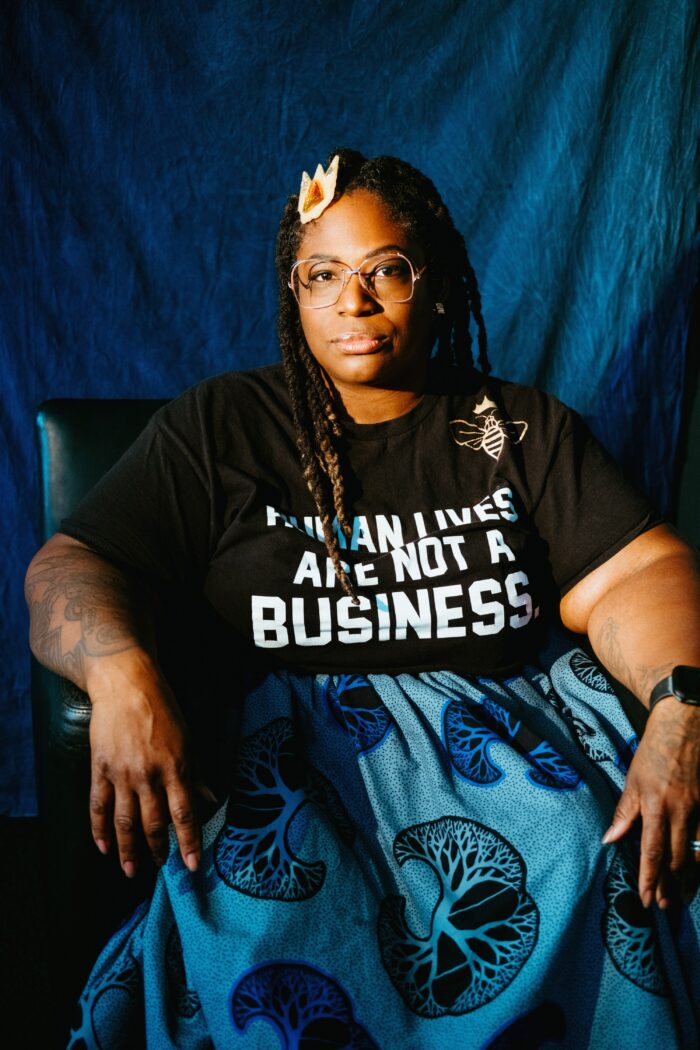
Elisheba Israel Mrozik is a multidisciplinary artist and active member of the North Nashville arts community. Her public murals, studio paintings, sculptures, and multimedia installations venerate the experiences and value of Black women in particular. To champion a Pan-African philosophy, she often adorns her forms with Ankara fabrics and Afrocentric motifs, hairstyles, body piercings, and scarifications. She situates these empowered figures within landscapes filled with motifs and graphics suggesting Afrofuturistic worlds.
Mrozik earned a BFA in computer arts from Memphis College of Art in 2006. She moved to Nashville in 2007 and has since championed local Black artists. In 2011, she became the first licensed Black tattoo artist in Middle Tennessee, and her business, One Drop Ink Tattoo Parlour and Gallery, was a central stop on the Jefferson Street Art Crawl. She is the founder of the North Nashville Arts Coalition. Her murals can be found at many sites around Nashville, including on Jefferson Street, Buchanan Street, Chestnut Street, the Elizabeth Duff Transit Center on Herman Street, and Jefferson Street. Her art has been exhibited at the Boheme Collectif, Nashville; the Carl Van Vechten Art Gallery, Fisk University, Nashville; Columbia State Community College, TN; Corvidae Gallery, Nashville; the Frist Art Museum, Nashville; and the Vanderbilt University Divinity School, Nashville
About Lauren Gregory
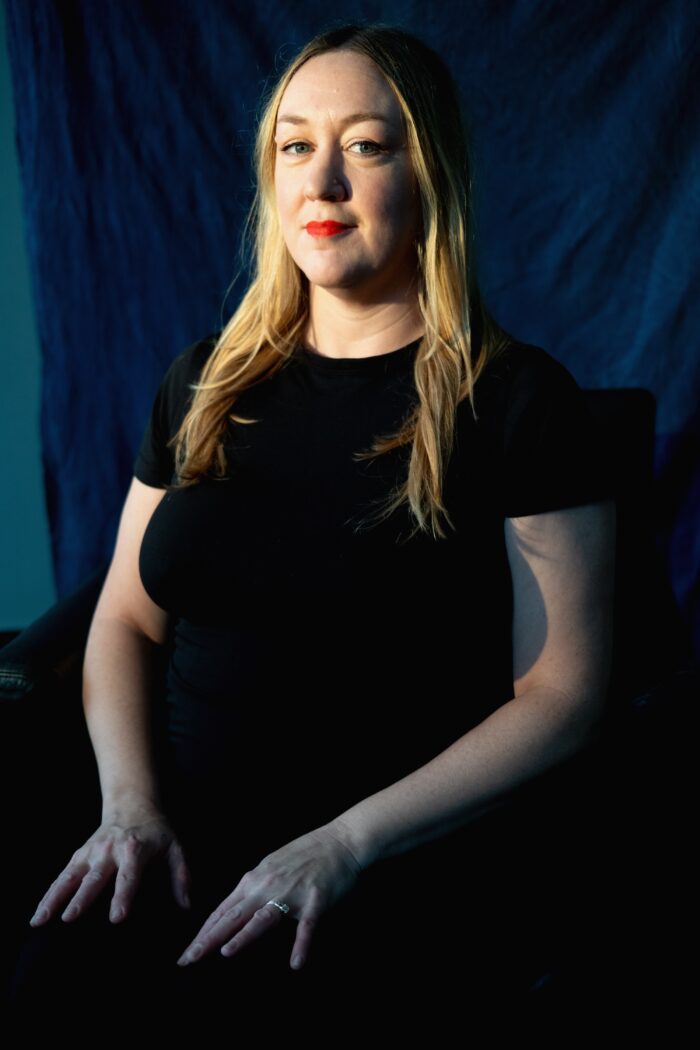
Lauren Gregory is a multidisciplinary artist whose practice spans painting, fiber art, and video animation. Raised in the mountains of East Tennessee, Gregory is a third-generation Southern artist who learned quilting and painting from her mother and grandmother. Their influence instilled a deep appreciation for traditional crafts, which Gregory reinterprets with humor and irony, challenging conventional boundaries between medium, composition, and content. Gregory is recognized for her innovative stop-motion oilpaint animations in which thick, impasto-style paintings are transformed into dynamic moving images. Her work also includes paintings on unconventional surfaces such as faux fur and quilts that blend kaleidoscopic compositions with symbolic imagery and pop-culture fabric sources. Guided by intuition and spontaneity, Gregory makes art that reflects an interplay between Tennessee’s physical landscape and her own emotional terrain. Her playful experimentation renders a language of wit and whimsy, exploring memory, ephemerality, and the tension between capturing and releasing a moment.
Gregory holds a BFA from the University of South Carolina, Columbia, and an MFA in painting from the School of the Art Institute of Chicago. She teaches as a professor of experimental animation and painting at Parsons School of Design, New York, and as a professor of quilting and animation at Ox-Bow School of Art and Artists’ Residency, Saugatuck, MI. Gregory’s animations and video works have been exhibited at institutions such as MoMA PS1, Queens; the Museum of Contemporary Art, Los Angeles; and the New Museum, New York. Her collaborative projects include music videos for Bayonne, Norah Jones, and Toro y Moi. Gregory has participated in artist residencies in Hungary, Italy, and New York.
About Jana Harper
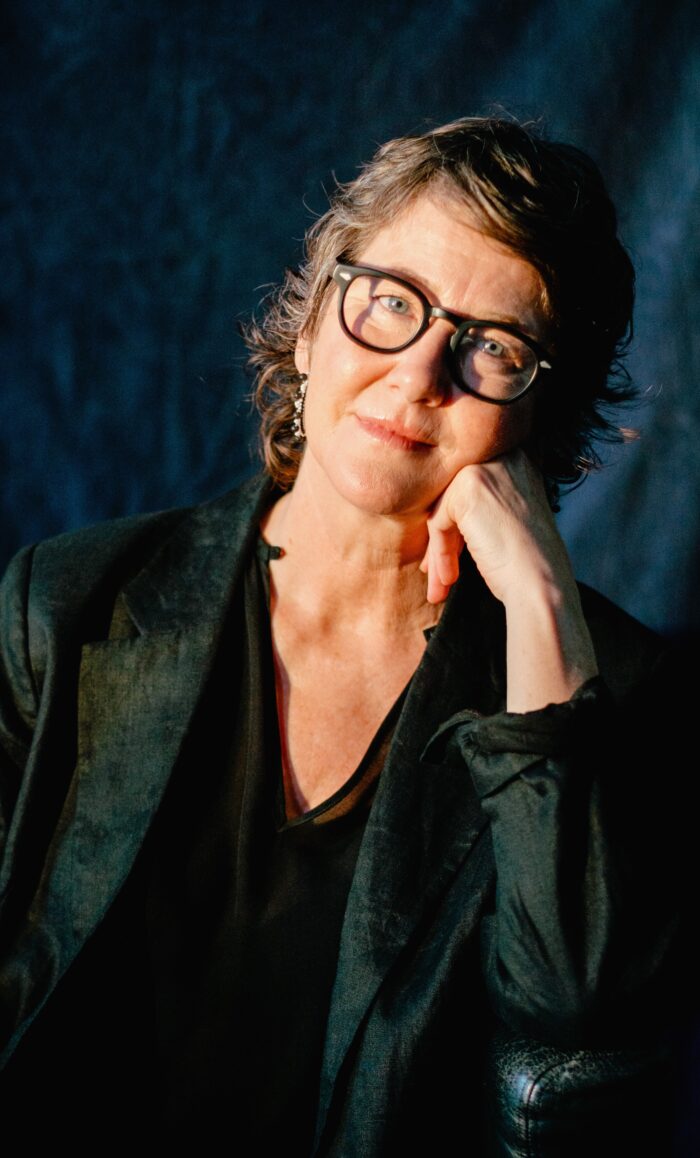
Jana Harper is an interdisciplinary artist whose work navigates the tensions between the material and the transcendent. While working across different media—including performance, sculpture, painting, and photography—Harper transforms the burdens of human history with compassion, love, and empathy. Much of her work reflects the history of her tribe, the Mackinac Bands of Chippewa and Ottawa Indians. Whether acknowledging the spiritual traces of migration or her forebears’ language and homeland, Harper seeks to honor and voice the unforgettable legacies of her ancestors.
Harper graduated with an MFA from Arizona State University, Tempe, and a BA from Evergreen State College, Olympia, WA, and she was a Core Student Fellow at Penland School of Crafts, Bakersville, NC. She is currently a professor of the practice of art at Vanderbilt University, Nashville, and previously taught art at Washington University in St. Louis. She is the recipient of several awards, including an Art Works grant from the National Endowment for the Arts; the Cité International des Arts residency, Paris, France; the Corporation of Yaddo residency, Saratoga Springs, NY; the Current Art Fund from Tri-Star Arts and the Warhol Foundation; the Good Hart Artist Residency, Good Hart, MI; a Mellon Foundation Digital Humanities Fellowship; a Smithsonian Artist Research Fellowship; the Southern Constellations Fellowship, Elsewhere Museum, Greensboro, NC; a Tennessee Arts Commission Individual Artist Fellowship; and a Thrive grant from Metro Arts Nashville. She has also exhibited and performed at numerous institutions, including the American University Museum at the Katzen Arts Center, Washington, DC; Basile Gallery, Indianapolis; Brick Aux, New York; Governor’s Island, New York; the Havana Biennial, Matanzas, Cuba; the International Museum of Art and Science, McAllen, TX; Napoleon Gallery, Philadelphia; the National Gallery of Art, Washington, DC; OZ Arts Nashville; Powell Gardens, Kingsville, MO; and the Tarble Arts Center, Charleston, IL.
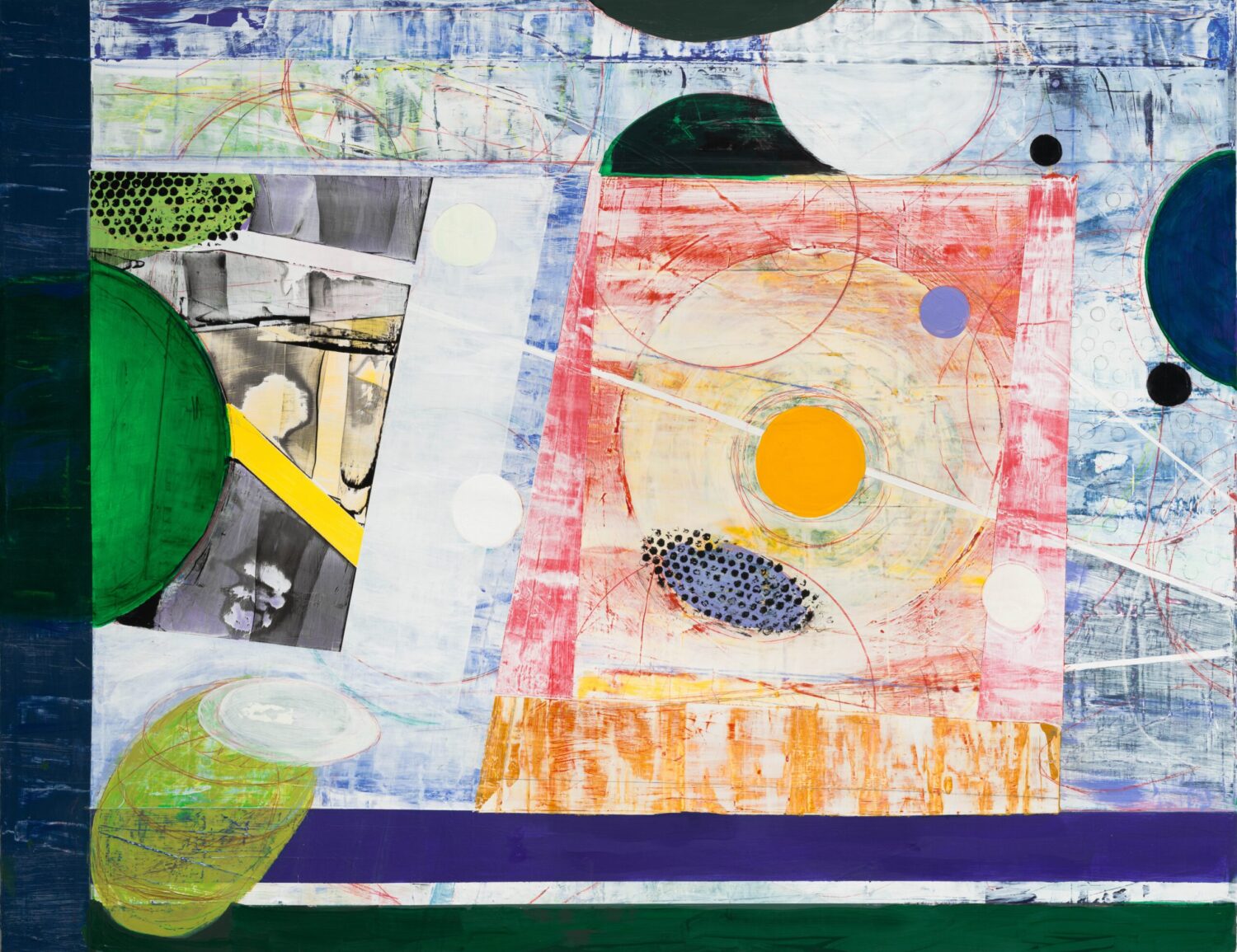
Top Photo: Carol Mode. ENTITY, 2025. Acrylic on canvas; 40 x 50 in. Courtesy of the artist. © 2025 Carol Mode. Photo: John Schweikert
Related exhibition