Beauty and Ritual: Judaica from the Jewish Museum, New York
October 30, 2026–February 7, 2027
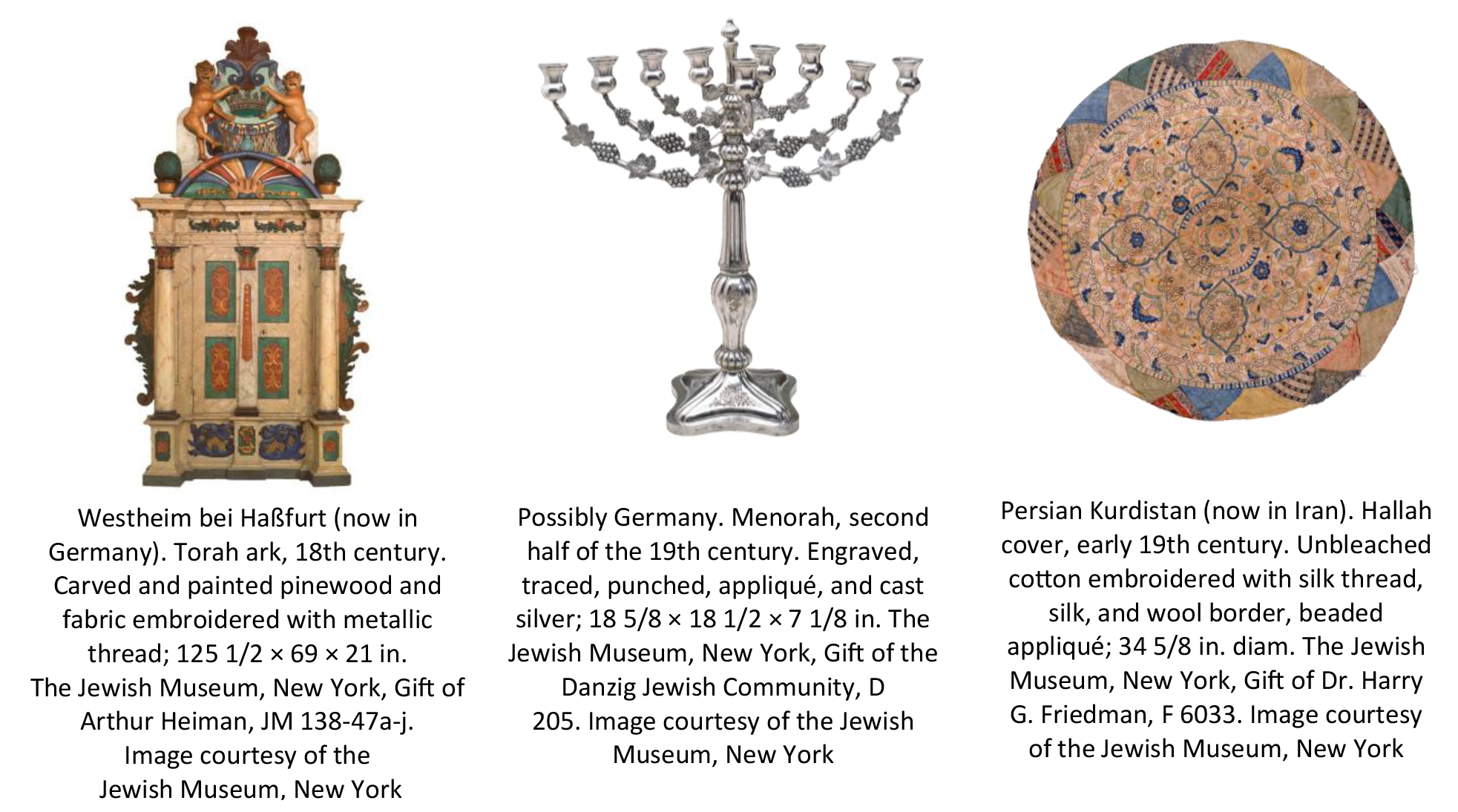
NASHVILLE, Tenn. (September 15, 2026)—The Frist Art Museum presents Beauty and Ritual: Judaica from the Jewish Museum, New York, an exhibition that explores the artistic, cultural, and ritualistic significance of more than 130 Jewish ceremonial objects (Judaica) spanning six continents and nearly four thousand years. Drawn from the world-renowned collection of the Jewish Museum in New York City, Beauty and Ritual will be on view in the Frist’s Upper-Level Galleries from October 30, 2026, through February 7, 2027.
Beauty and Ritual illuminates how Jewish communities and artists from South Asia to North Africa and from Western Europe to Australia as well as North and South America have creatively adapted traditional forms of Judaica by utilizing a rich array of styles and techniques. The works on view exhibit a tremendous diversity of materials and makers, geographic origins, and historical eras. “Religion has served as the catalyst for many of the greatest works of art of all time,” says Frist Art Museum curator-at-large Trinita Kennedy. “Over the Frist’s twenty-five-year history, we have presented exhibitions exploring the art of world faiths including Buddhism, Christianity, Hinduism, and Islam. This fall we will open our first exhibition about the art of Judaism, one of the world’s oldest monotheistic religions.”
Beauty and Ritual invites audiences of all backgrounds and cultures to learn more about Judaica, and the history of Jewish culture throughout the world. The exhibition seeks to contextualize these works within time and place, reinforcing the centrality of ritual in the Jewish diaspora and the globalized production of religious artifacts.
The exhibition is organized into three thematic sections, moving from the communal space of the synagogue to the private setting of the home, and finally to a close look at the Hanukkah menorah, an iconic symbol of Jewish culture often visible in more public spaces. The first section, “The Art of the Synagogue: Adorning the Torah,” focuses on objects that enhance the Torah, the first five books of the Hebrew Bible and the centerpiece of the Jewish synagogue. Taking the form of a parchment scroll attached to two wooden staves, the Torah narrates the history of the Israelites and serves as a guide for standards and laws in Jewish practice. The scroll is adorned with precious objects to glorify the sacredness of the text, beautify the ritual commandments, and protect it. “Torah cases, crowns, finials, and pointers are often modeled on royal regalia and are made by talented craftspeople from the finest materials available,” writes Abigail Rapoport, the Jack, Joseph and Morton Mandel Curator of Judaica at the Jewish Museum. The Torah ornaments on view reveal the great variety of styles and forms found among different Jewish communities including a Torah ark curtain from Türkiye (late 18th or early 19th century), a chased and pierced Torah crown and shield from Greece (1859–60), and an embroidered silk velvet mantle from Morocco (1900–1920). The innovative Torah crown (1969) by the Israeli-American artist Moshe Zabari reinterprets the traditional object in an elegant abstract style.
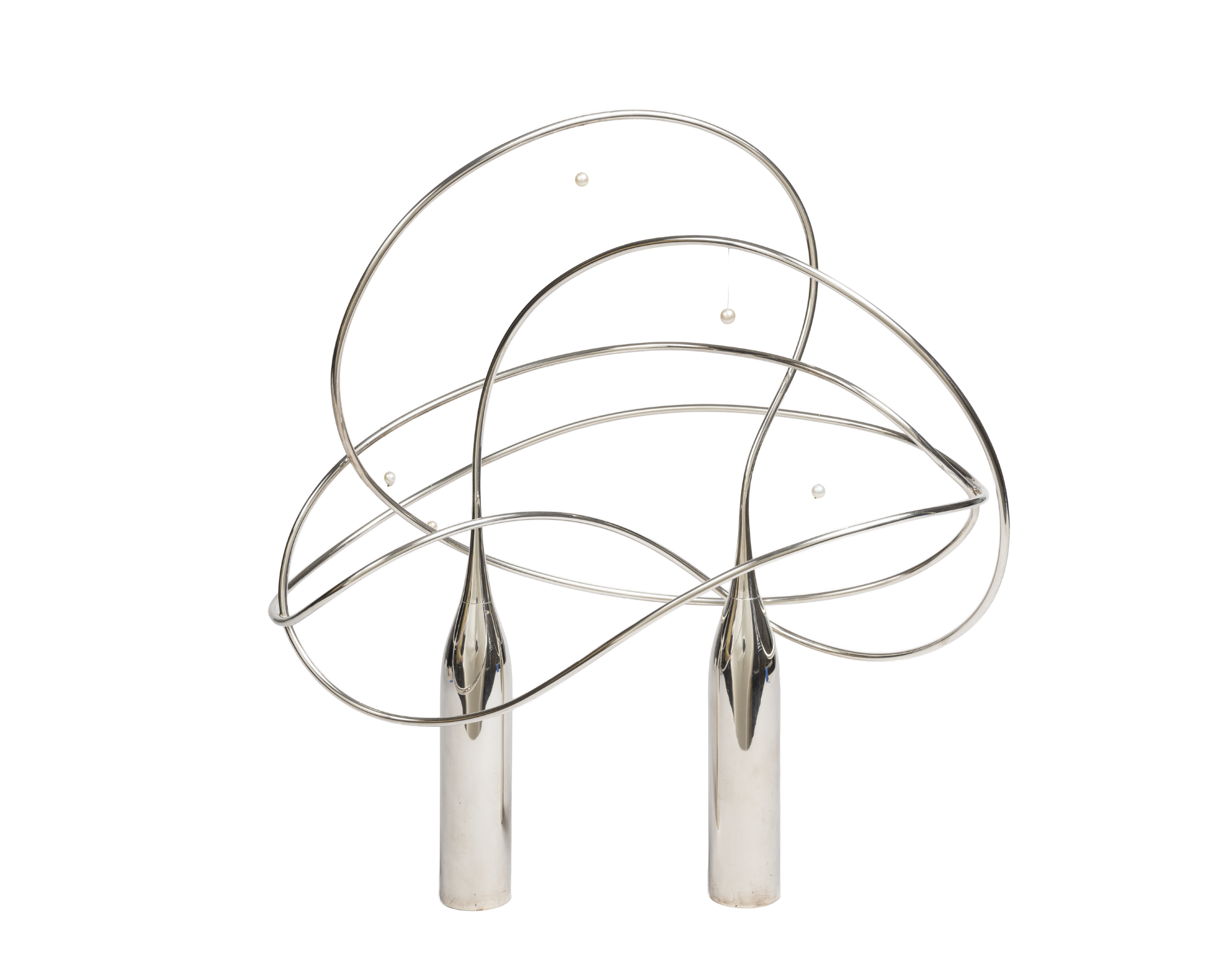
The next section, “A Day of Rest: The Splendor of the Sabbath at Home,” shifts the focus to the domestic setting and the Sabbath, displaying works created to enrich the weekly day of rest. Every Friday evening at sundown, Jewish communities worldwide welcome and sanctify the start of the Sabbath with the ceremonial lighting of candles and the blessing of bread (hallah) and wine before an evening meal. Each part of the Sabbath has its ritual objects, and over the centuries, these have been reinterpreted in many ways, with contemporary artists drawing out the rituals’ multisensory aspects. Objects in this section range from hanging lamps and candlesticks to ornate goblets and spice containers. A 19th-century embroidered and beaded hallah cover from Persian Kurdistan (now in Iran) is ornamented with colorful flowers and a Hebrew inscription about spiritual nourishment.
At the Frist, the presentation of this exhibition will coincide with Hanukkah, the eight-day festival of lights. Beauty and Ritual concludes with the section “Beyond the Synagogue and the Home: The Radiance of the Hanukkah Menorah.” The Hanukkah menorah is a candelabra or lamp holding nine oil sockets or candles and has been a symbol of the Jewish people for more than two millennia. The Jewish Museum’s collection of Hanukkah menorot is one of the largest in the world, with more than one thousand examples spanning five centuries and almost the entire globe. Examples from North Africa crafted by Sephardic Jews who fled Spain after 1492 typically have features shared with Islamic art and architecture, such as colonnades of pointed or keyhole arches, arabesque scrollwork, and patterns of stylized birds or entwined vines. In contrast, the menorah by Argentinian architect Miguel Oks made in 1993 is inspired by various scientific instruments, emphasizing the involvement of Jews in science and connecting science and faith, mind, and soul.
“The remarkable survival of Judaica cannot be taken for granted. Over the centuries, Jewish communities faced repeated persecution and expulsion, resulting in significant losses of their ceremonial art,” explains Rapoport. “These losses are countered by the work of contemporary artists who interpret Jewish traditions with fresh and innovative designs.” Beauty and Ritual aims to provide new perspectives on stories of Judaica. To contextualize the artworks, the Frist is collaborating with members of Nashville’s longstanding and vibrant Jewish community on an audio guide, videos, and public programs. A family-friendly experience, the exhibition will include a colorful and engaging kids guide.
Opening Program
Opening Conversation: Beauty and Ritual
Thursday, October 29, 6:30 p.m.
Auditorium
Free for members; $20 for not-yet-members
Registration required
Join a conversation with Abigail Rapoport, the Jack, Joseph and Morton Mandel Curator of Judaica at the Jewish Museum; Trinita Kennedy, Frist Art Museum curator-at-large; and Seth Feman, PhD, Frist Art Museum executive director and CEO, to explore Jewish ceremonial art from around the world and across centuries. From exquisite silver Torah ornaments to one-of-a-kind Hanukkah menorahs, hear about highlights of Beauty and Ritual: Judaica from the Jewish Museum, New York.
Begin the evening with a performance of traditional Jewish music in the Grand Lobby from 5:15 to 6:15 p.m., featuring local musician Cantor Josh Goldberg. Cantor Josh Goldberg is an accomplished vocalist, prolific songwriter, music producer, filmmaker, and cantor. The museum will remain open until 9:00 p.m. to allow guests time to visit the galleries after the conversation.
Visit FristArtMuseum.org/events to learn about additional programs and events.
Exhibition Credit
Beauty and Ritual: Judaica from the Jewish Museum, New York has been organized by the Jewish Museum, New York.
Supporter Acknowledgment
Supported in part by the Sandra Schatten Foundation
The Frist Art Museum is supported in part by The Frist Foundation, Metro Arts, and the Tennessee Arts Commission, which receives funding in part from the National Endowment for the Arts.
FOR ADDITIONAL INFORMATION
Buddy Kite: 615.744.3351, bkite@FristArtMuseum.org
Connect with us @FristArtMuseum
About the Frist Art Museum
Accredited by the American Alliance of Museums, the Frist Art Museum is a 501(c)(3) nonprofit art exhibition center dedicated to presenting and originating high-quality exhibitions with related educational programs and community outreach activities. Located at 919 Broadway in downtown Nashville, Tenn., the Frist Art Museum offers the finest visual art from local, regional, national, and international sources in exhibitions that inspire people through art to look at their world in new ways. Information on accessibility can be found at FristArtMuseum.org/accessibility. Gallery admission is free for guests ages 18 and younger and for members, and $20 for adults. For current hours and additional information, visit FristArtMuseum.org or call 615.244.3340.