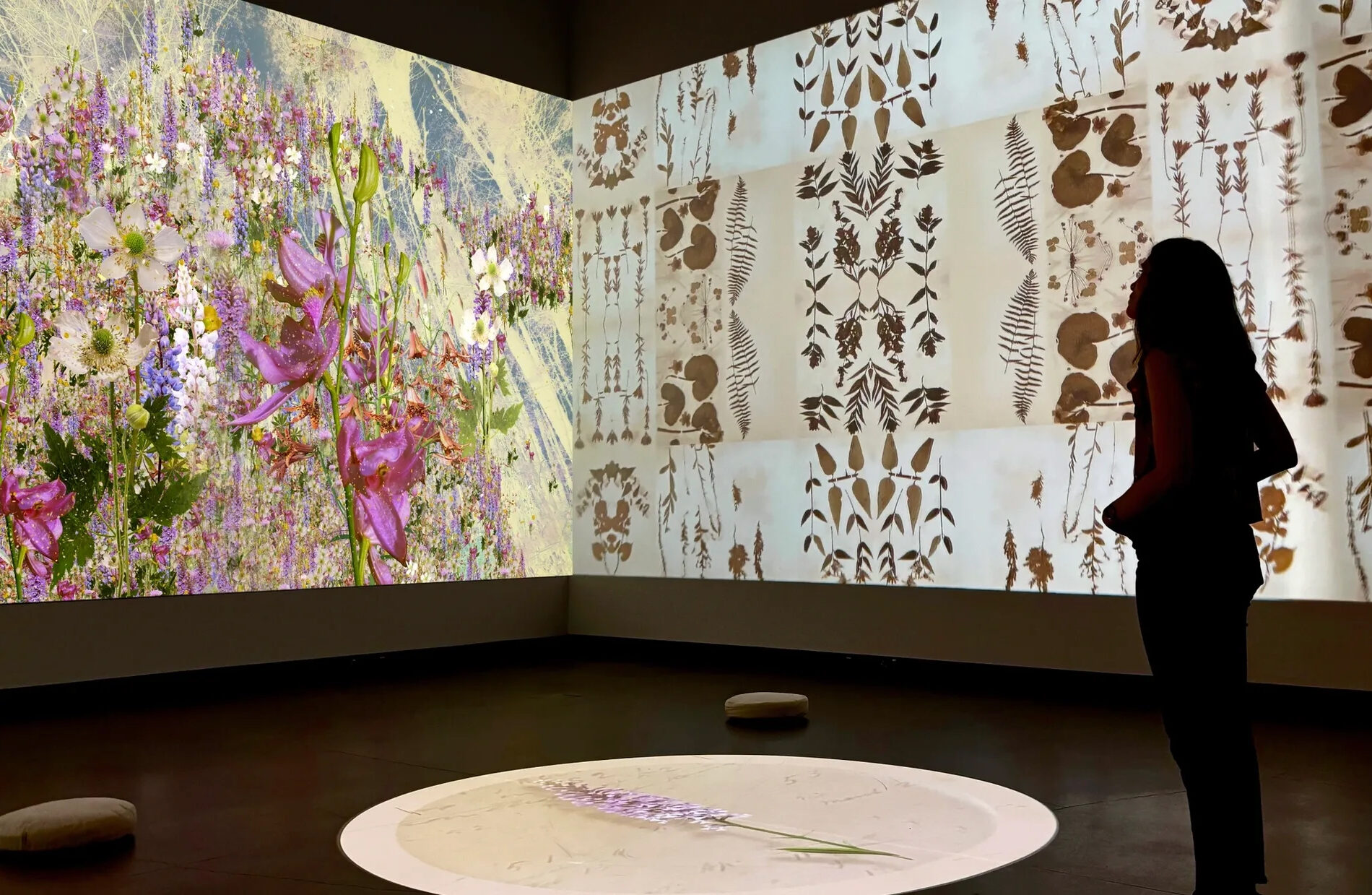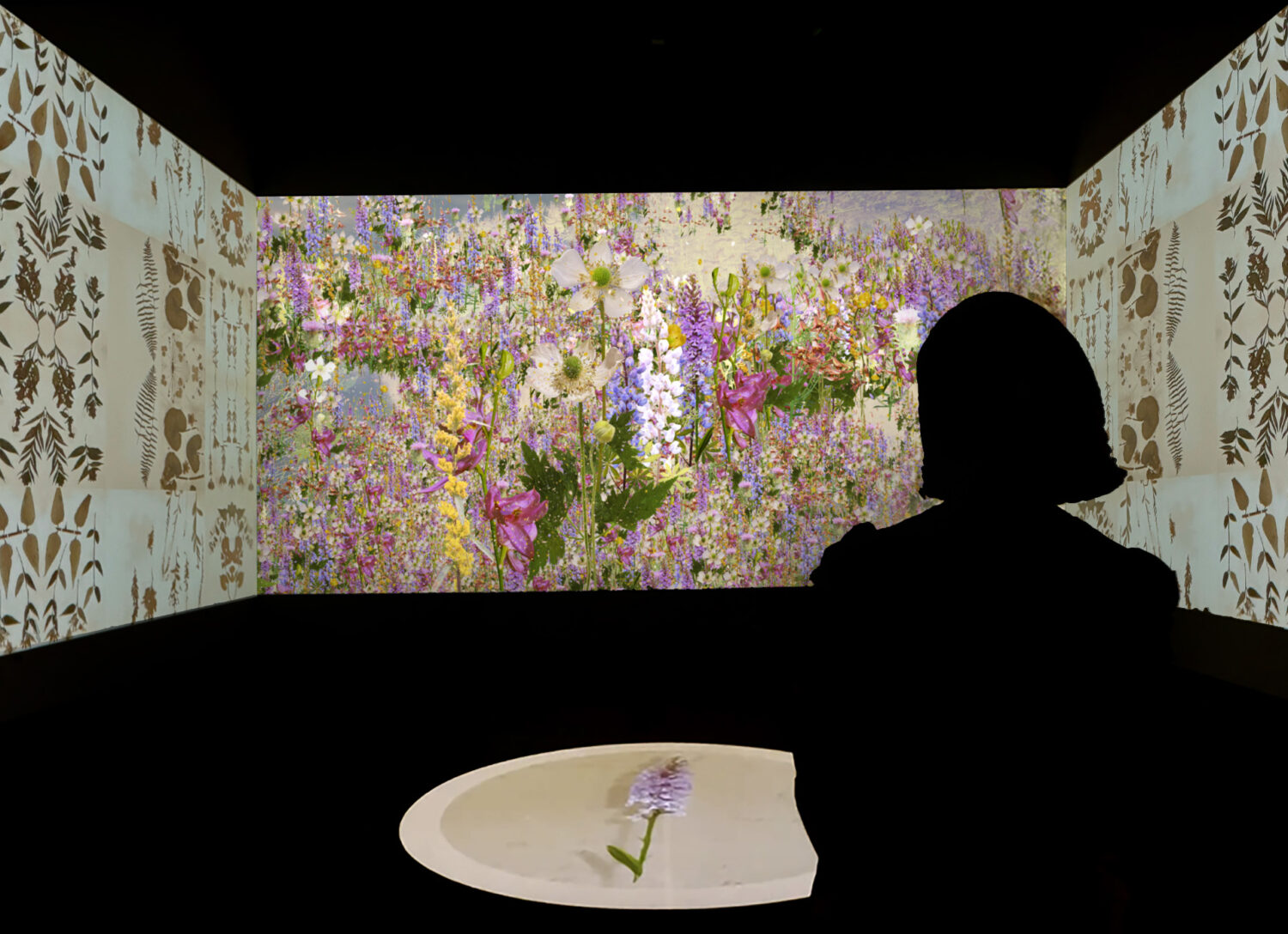
After experiencing In Search of Thoreau’s Flowers—The Memory of a Season, join collaborators Robin Vuchnich, a new-media artist, and Emily Meineke, assistant professor of urban landscape entomology at the University of California, Davis, as they discuss the creative partnership behind the exhibition. Moderated by Frist Art Museum Chief Curator Mark Scala, this conversation explores the intersection of art, ecology, and scientific research.
Top image: Robin Vuchnich. In Search of Thoreau’s Flowers—The Memory of a Season (installation view), 2025. Courtesy of the artist. © Robin Vuchnich
About the speakers
New-media artist Robin Vuchnich draws on the herbarium of nineteenth-century philosopher and naturalist Henry David Thoreau, now housed at Harvard University, to explore the effects of biodiversity loss through immersive, interactive installations. For In Search of Thoreau’s Flowers—The Memory of a Season, Vuchnich collaborated with scientists tracking species decline in Concord, Massachusetts, to transform Thoreau’s collection of pressed plants into a large-scale visualization of environmental change. The work reveals a startling reality: More than half of the species Thoreau documented around Walden Pond are now declining toward local extinction. Through projected imagery, responsive digital flowers, and soundscapes recorded at Walden Pond, Vuchnich invites viewers to reflect on the fragile relationship between memory, place, and the natural world.
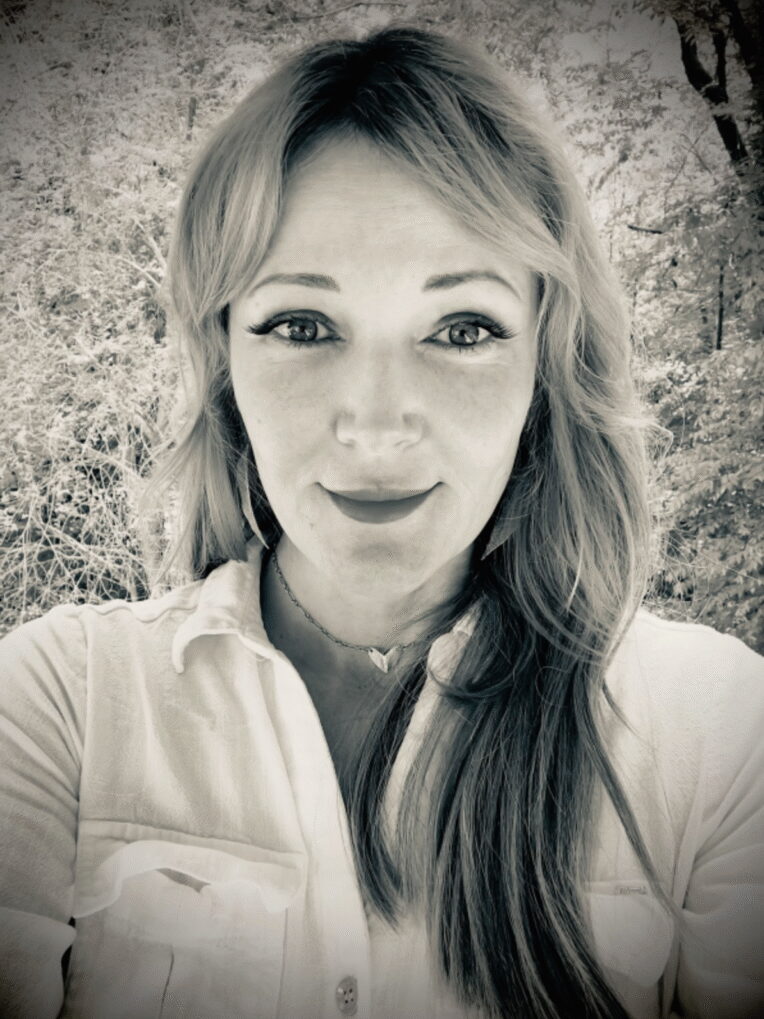
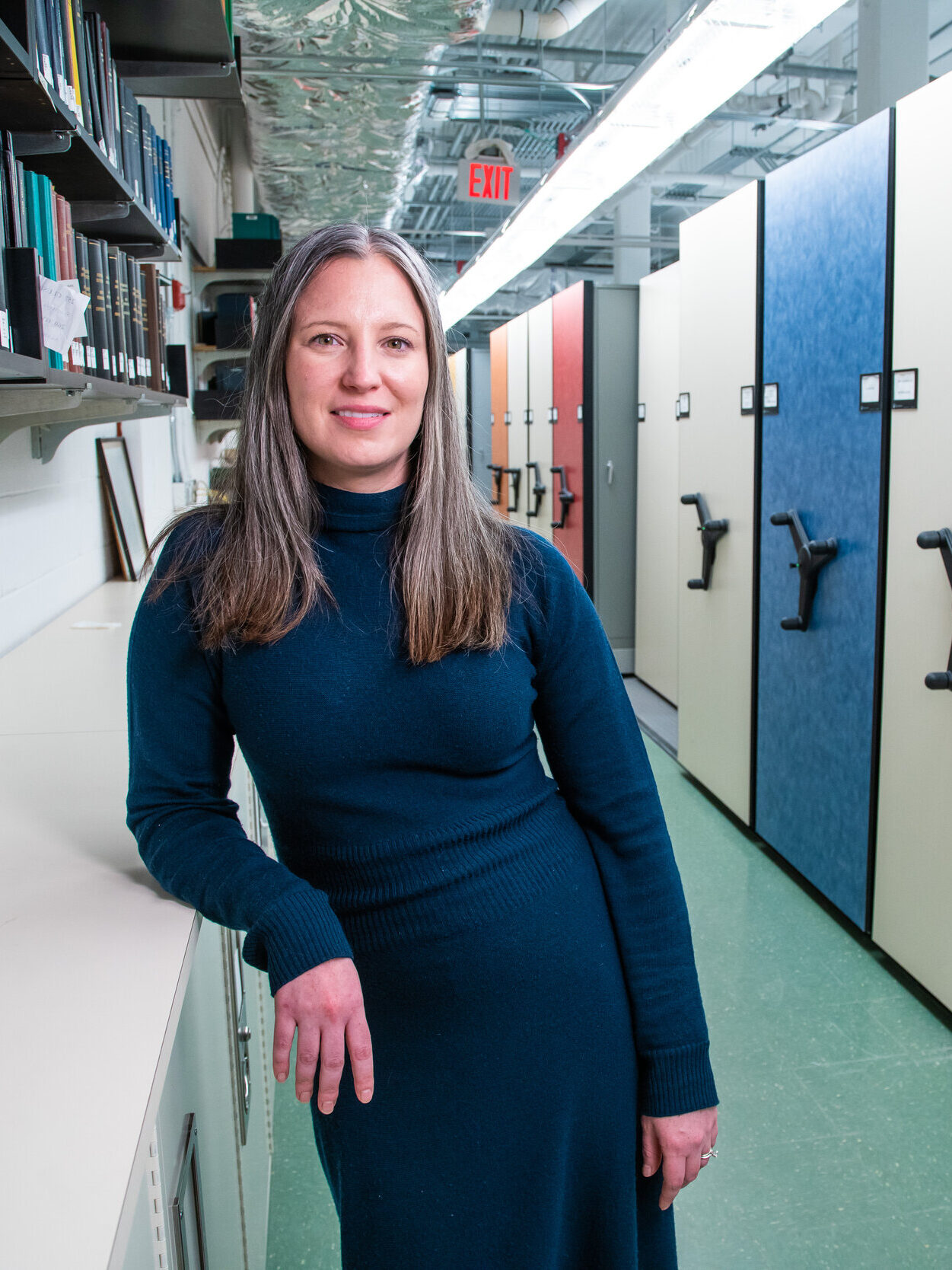
Dr. Emily Meineke is an assistant professor of landscape entomology and Hellmann Fellow at University of California, Davis. Meineke and her lab members investigate the effects of climate change on plants, plant-eating insects, and their interactions with one another. She teaches undergraduate and graduate courses on these topics that harness advanced pedagogical techniques, notably art-science fusion. From 2016 to 2019, Emily was a National Science Foundation Postdoctoral Fellow at the Harvard University Herbaria in the Department of Organismic and Evolutionary Biology, where she used herbarium specimens to document how urbanization and climate change have affected plant-insect relationships worldwide over the past 120 years.
Related exhibition