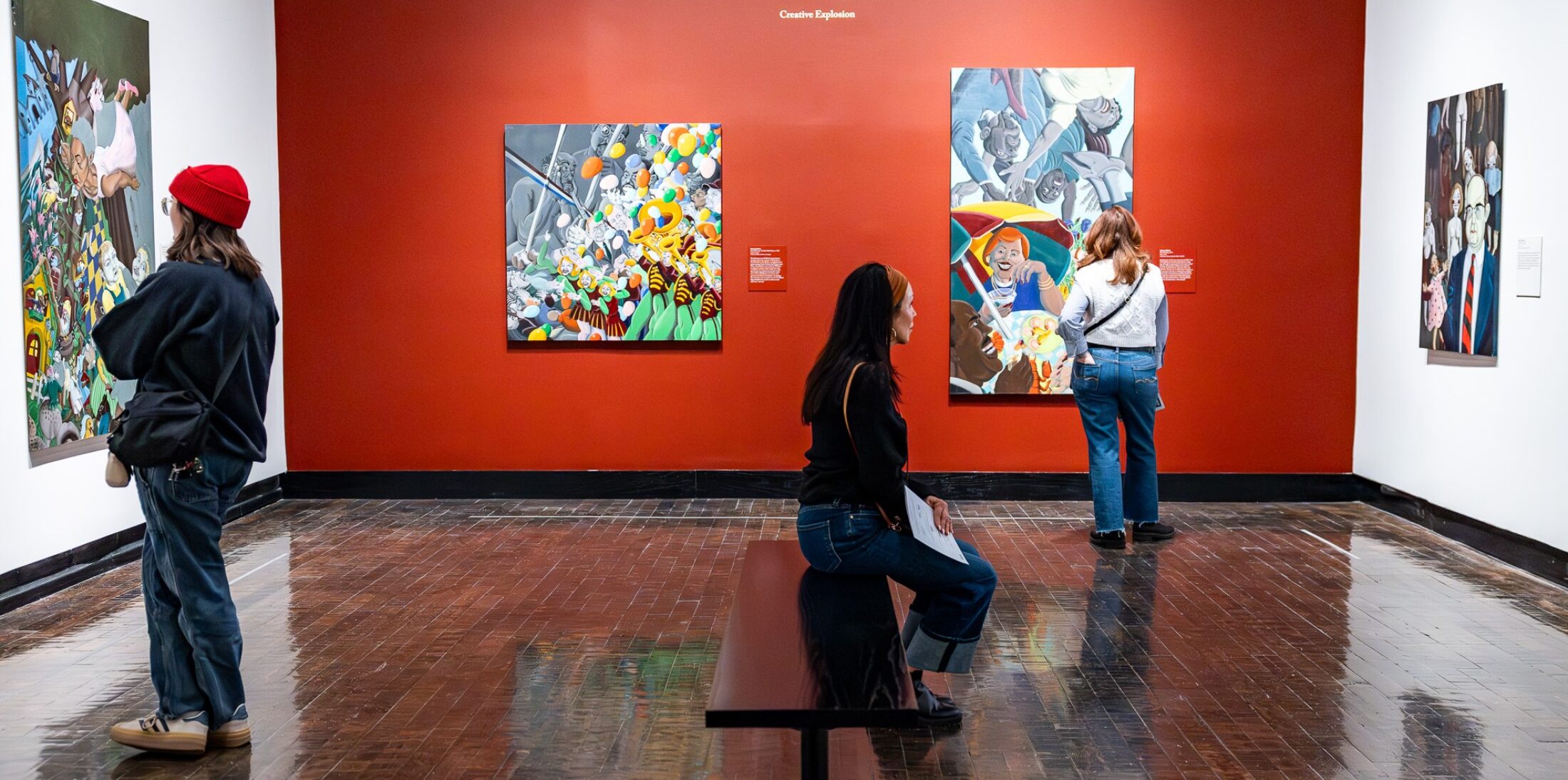
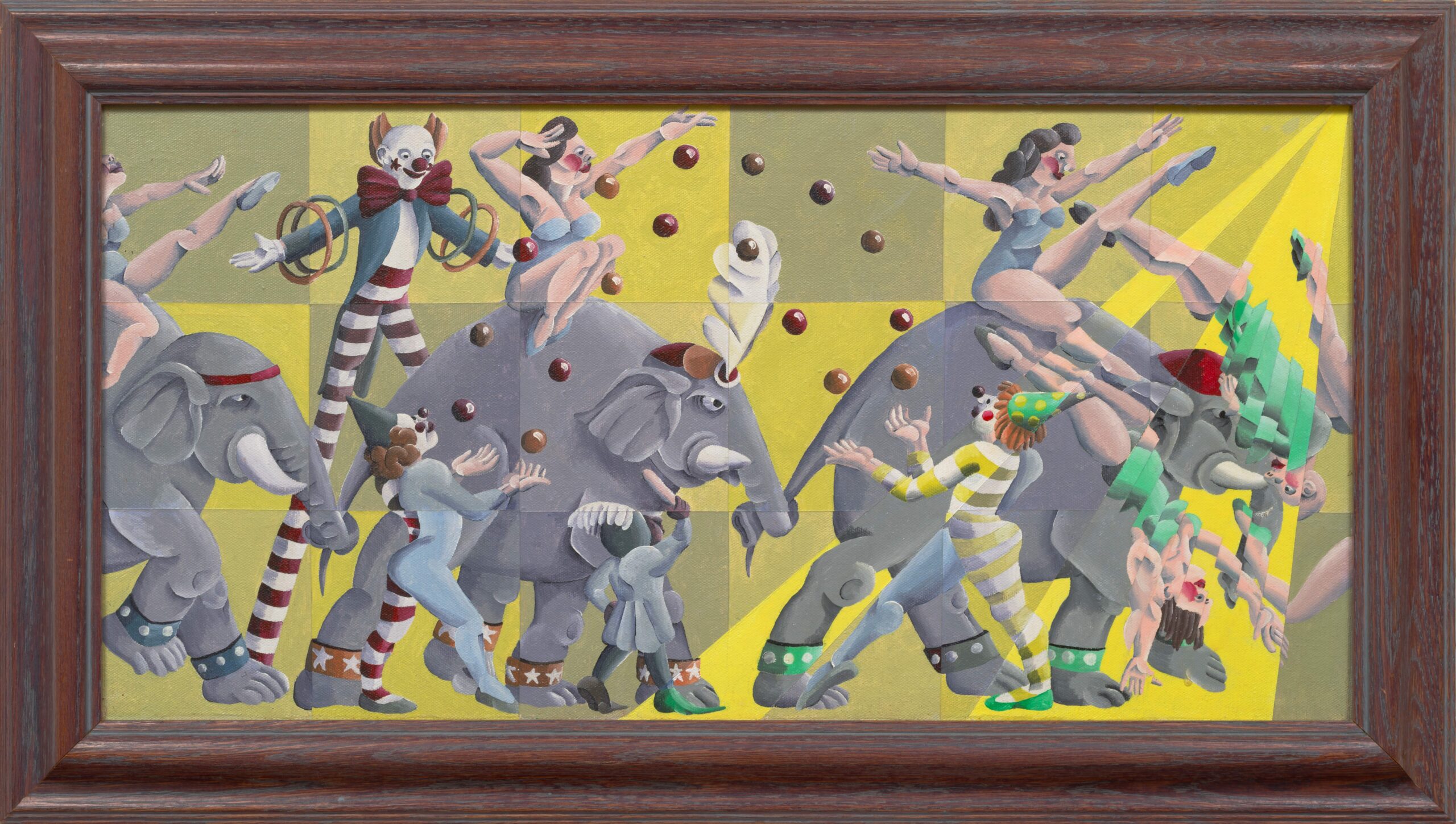
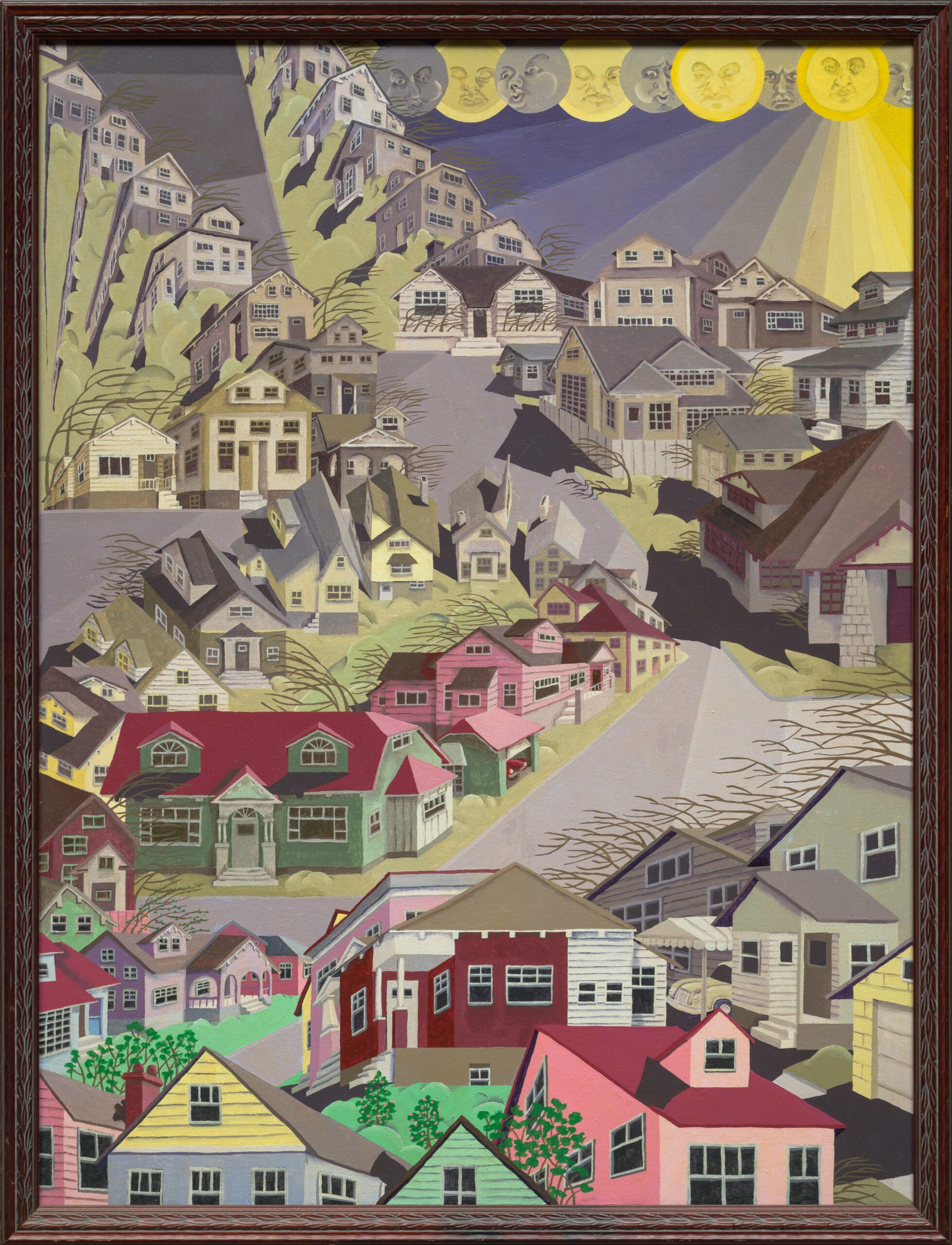
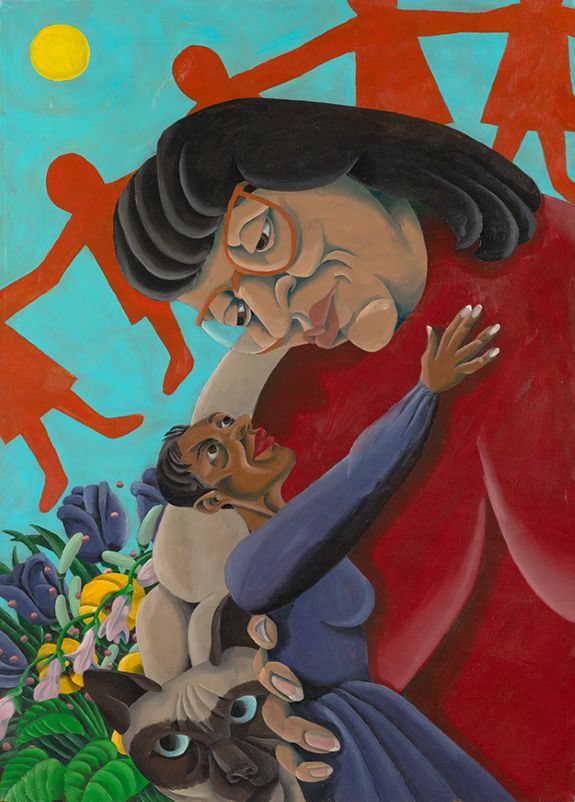
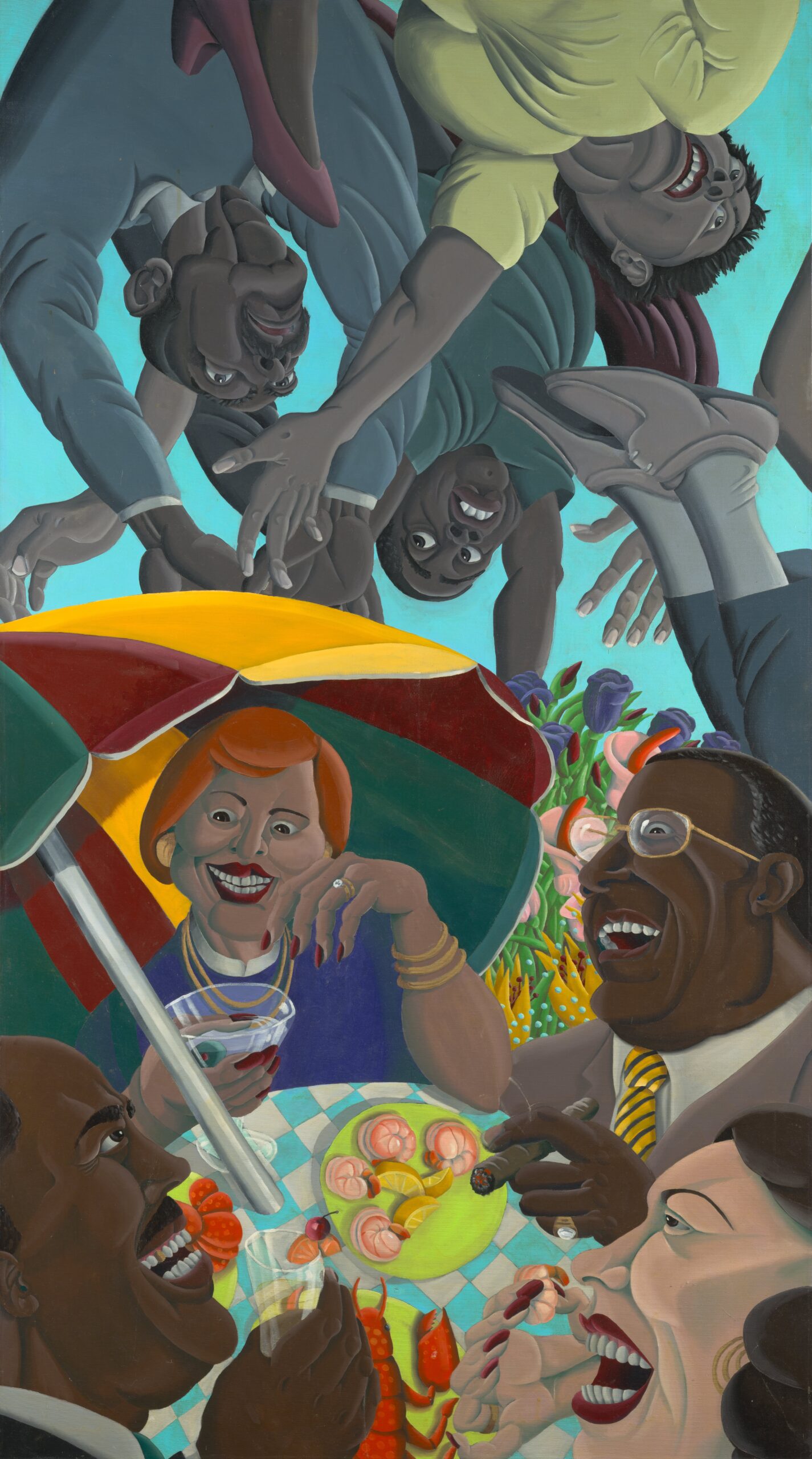
This exhibition showcases the incisive and still-timely work of Nashville-based artist Barbara Bullock (1946−1996). Bullock moved to Nashville in 1969 after being raised by her aunt and uncle in Buffalo, New York, and studied art at George Peabody College for Teachers (now a part of Vanderbilt University). Fifteen years later, after suffering a debilitating stroke at the age of thirty-five, Bullock returned to full-time art making as part of her physical recovery. At that time, Bullock’s style shifted considerably from precisely rendered graphite illustrations to boldly colored paintings that defy realistic spatial construction, influenced by both the double vison caused by her stroke and the work of M. C. Escher.
While Bullock used her art practice to help heal her double vision and restore her fine motor skills, she maintained that her ultimate goal was to help heal the world of social inequalities. Shaped by her own lived experiences, her work critiqued what she saw as systemic racism, sexism, and classism. In particular, Bullock offered satirical commentary on societal norms projected onto Black women born into upper-class families.
Bullock passed away in 1996, but the imprint she left on the Nashville art community lives on in her network of close friends and colleagues, some of whom are featured in the adjacent exhibition, In Her Place: Nashville Artists in the Twenty-First Century. Many continue to see her as a griot, a West African term for an oral historian and storyteller, and her works continue to be relevant as visual representations of both personal and collective experiences.
Organized by the Frist Art Museum with guest curator Carlton F. Wilkinson
The Frist Art Museum is excited to present Sistah Griot: The Iconoclastic Art of Barbara Bullock as part of the 2026 Tennessee Triennial, an initiative celebrating the work of contemporary artists and highlighting the strength and diversity of Tennessee’s visual art scene. The Frist is proud to join a consortium of museums and galleries contributing to this statewide celebration including the Memphis Brooks Museum of Art, the Knoxville Museum of Art, and the Hunter Museum of American Art in Chattanooga.

Exhibition gallery
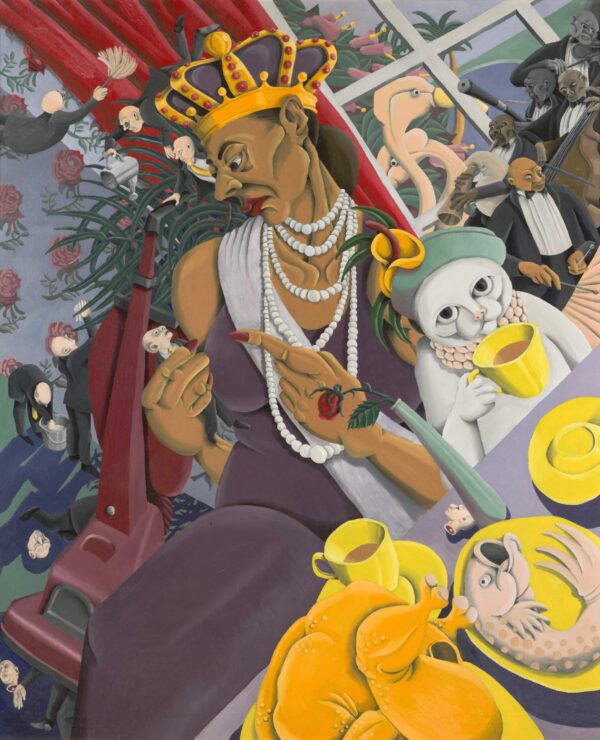
Barbara Bullock. If I Were Queen, 1992. Acrylic on canvas; 51 x 43 in. Collection of Dr. Albert Holloway. Photo: John Schweikert
Exhibition supporters
The Frist Art Museum is supported in part by

Resources